Kinetic art began with a simple yet radical idea: that sculpture does not need to stand still. Over the past century, artists have experimented with balance, mechanics, space, and perception to bring motion into the heart of sculpture.
What emerged is a diverse world of artworks that glide, sway, spin, shimmer, or simply respond to the slightest shift of air, inviting viewers into a dialogue not only with form, but with time itself. Kinetic sculpture is not one movement, but a constellation of approaches — from motor-driven machines to delicate suspended mobiles, from experiments with light to vast architectural interventions. Together, they reveal how motion has become one of the most poetic tools in modern and contemporary art.
Artists have explored the idea of movement since the early 20th century, drawing inspiration from the restless energy of the modern world. The Dadaists and Constructivists used mechanical components, optical effects, and rotating structures to challenge the static nature of traditional art. Futurism, with its obsession for speed and dynamism, contributed to the fascination with capturing motion in three dimensions.
By the 1950s, movement had become a central concern for many sculptors. Some artists embraced natural motion, pieces activated by air currents or gravity, while others turned to motors and engineered mechanisms. These works questioned how we perceive time, celebrated the rise of the machine age, and expanded sculpture into a field of real, physical change.
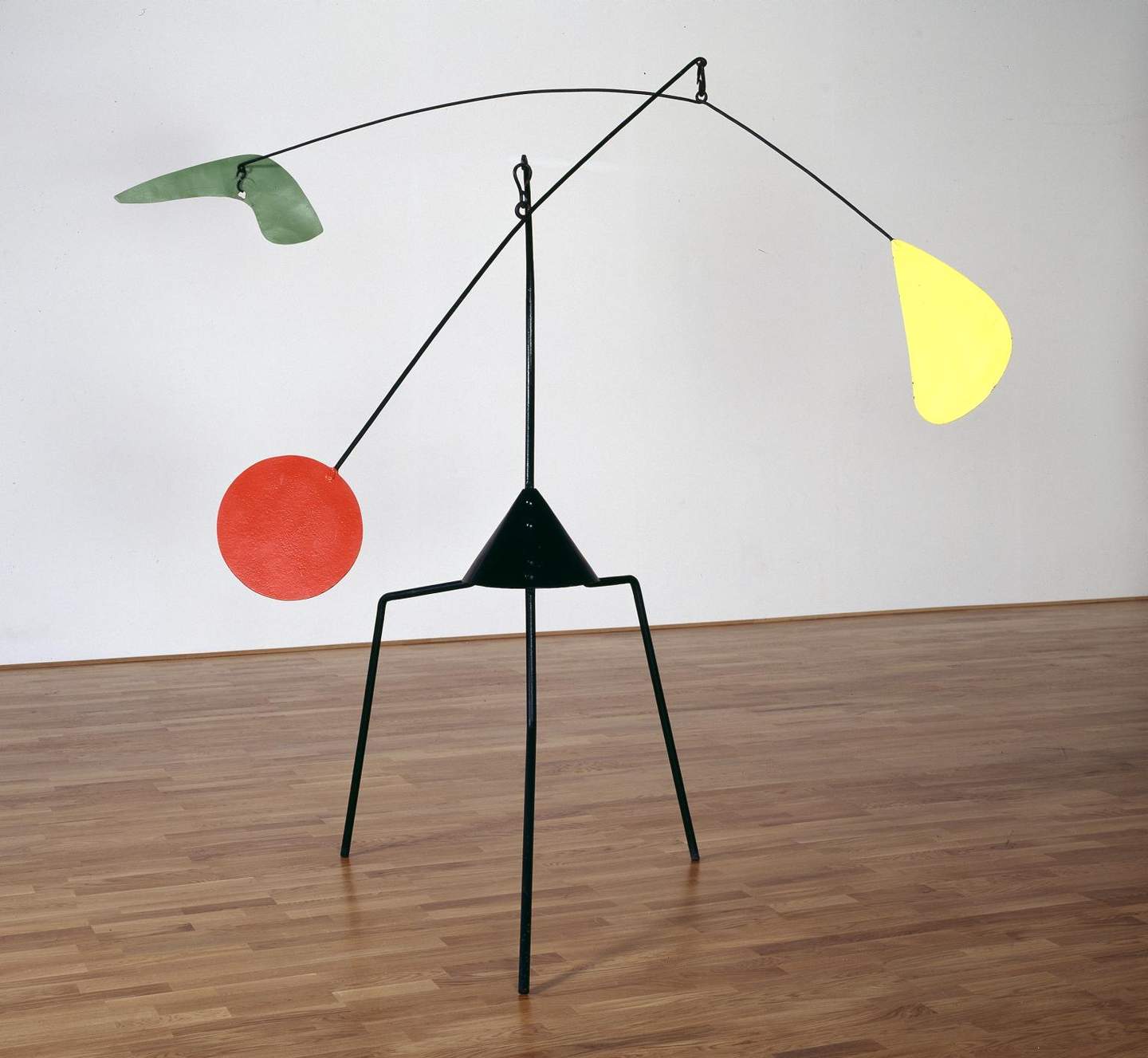
The idea of a mobile is now so embedded in the visual imagination that it is hard to believe there was a time when it did not exist. Before Alexander Calder, sculpture was rooted in mass and solidity. But in 1930, Calder began to pare his works down into pure abstraction, reducing forms to lines and shapes suspended in space. Intrigued by the possibility of setting these elements into motion, he created his first moving sculptures in 1931, some powered by small motors, others left to drift on their own.
Marcel Duchamp gave them their name: mobiles, from the French word meaning both “motive” and “motion.” Shortly afterward, Calder refined the form into what we now recognize as the quintessential mobile: delicately balanced elements suspended on wires, gently turning with air currents.
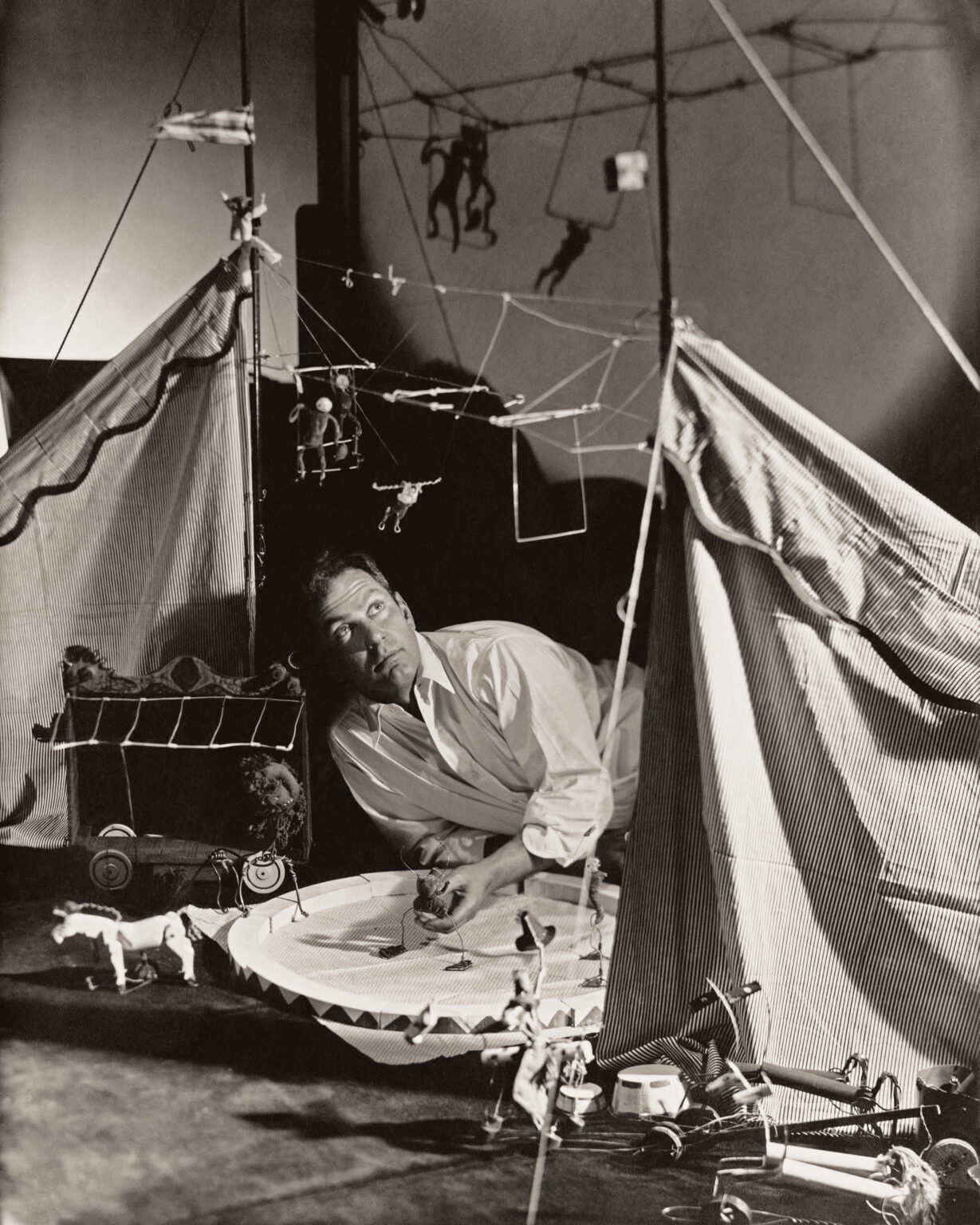
Calder’s mobiles reinvented sculpture from the inside out. They made air a sculptural material. They introduced chance, rhythm, and quiet performance. And they shifted attention from mass to movement, from solidity to suspension.
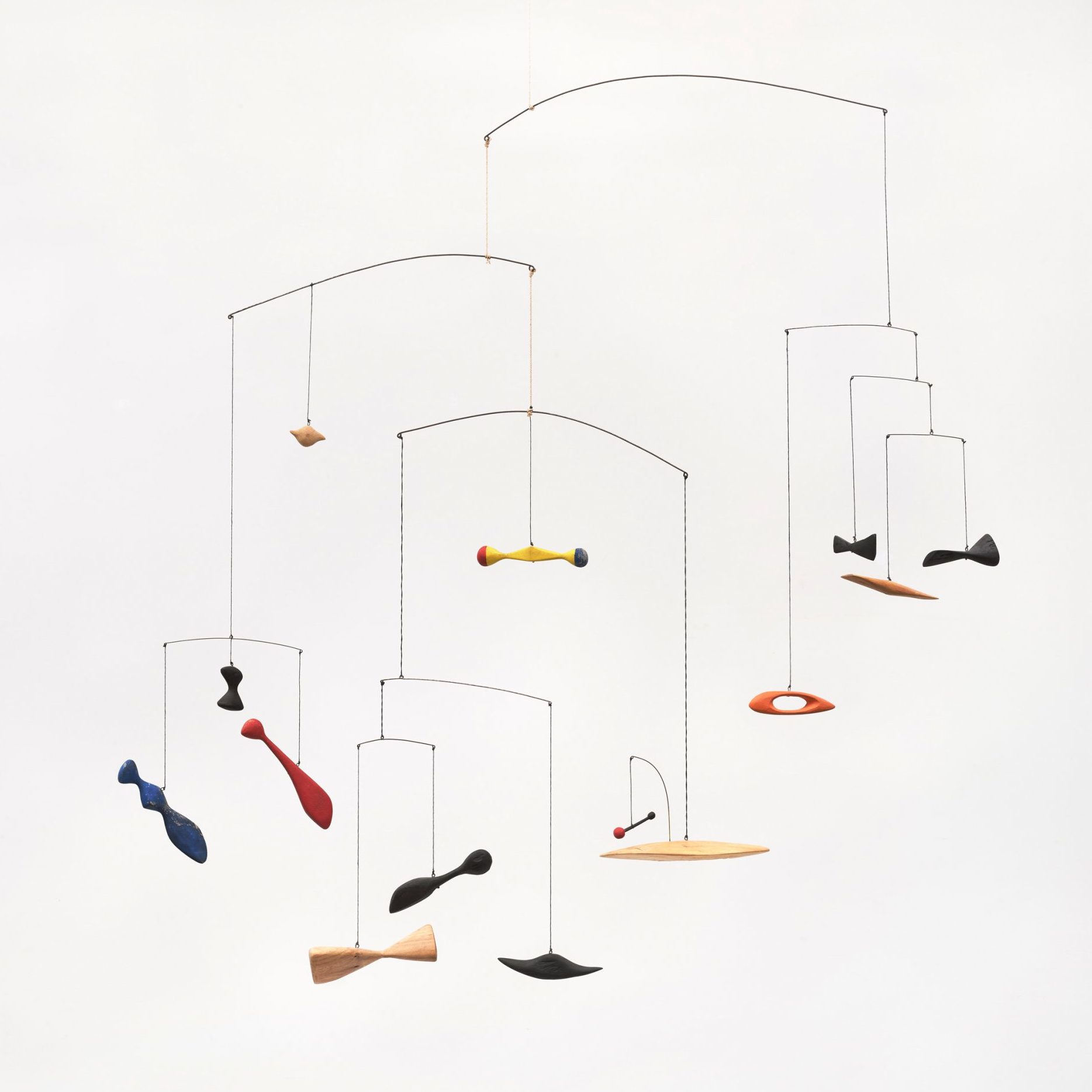
As kinetic art evolved, artists began to explore movement through structure and engineering rather than through air and balance alone. Naum Gabo introduced one of the earliest visions of motion as an intrinsic sculptural element. His transparent constructions and oscillating rods emphasized rhythm, tension, and the passage of time, proposing that sculpture could express the invisible forces shaping the modern world.
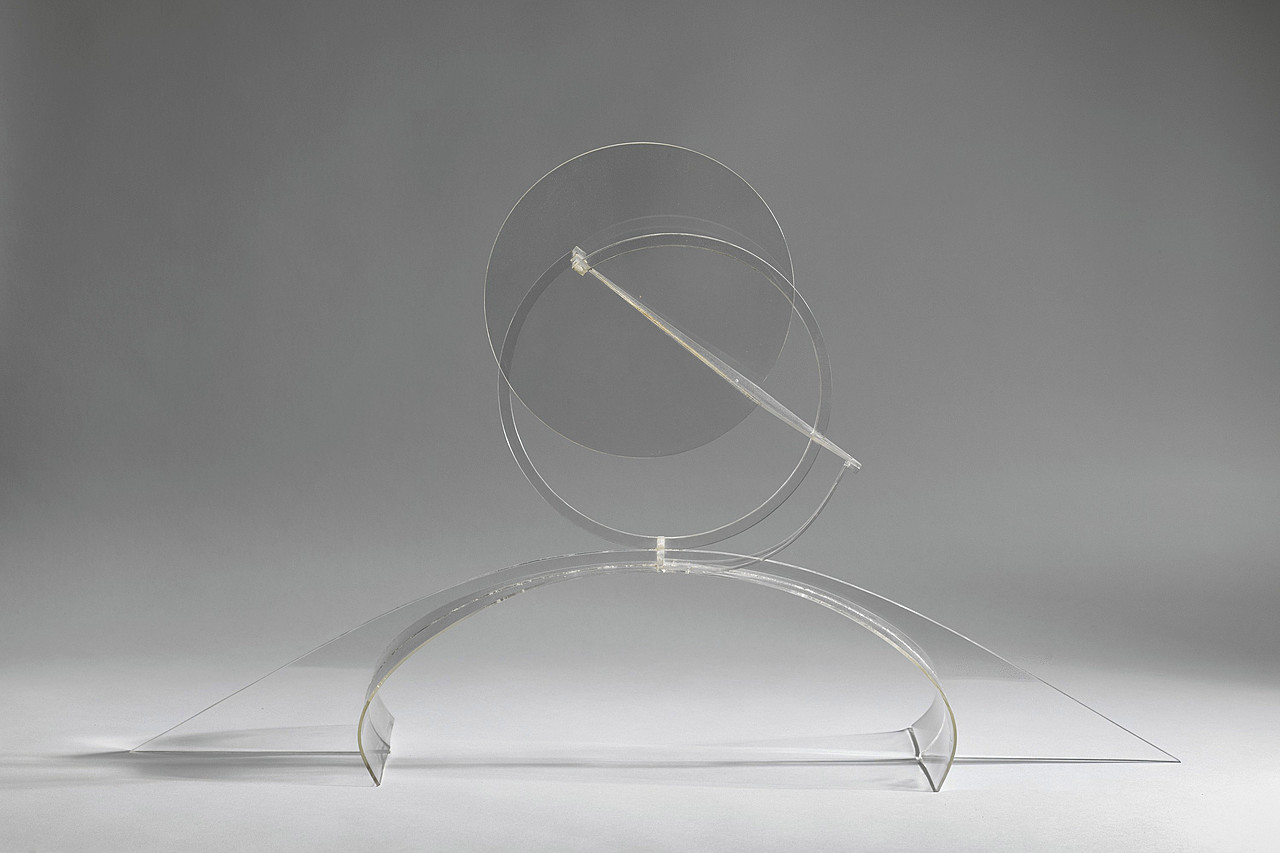
A generation later, Jean Tinguely approached movement with a very different energy, building exuberant mechanical assemblages that clicked, spun, or rattled themselves into a state of animated disorder. His works celebrated and critiqued the rise of industrial culture in equal measure, revealing both the fascination and unease surrounding machines in the postwar era. Together, these explorations expanded kinetic art beyond Calder’s poetics of air, opening new pathways where motion became a metaphor for the mechanical, technological, and psychological conditions of modern life.
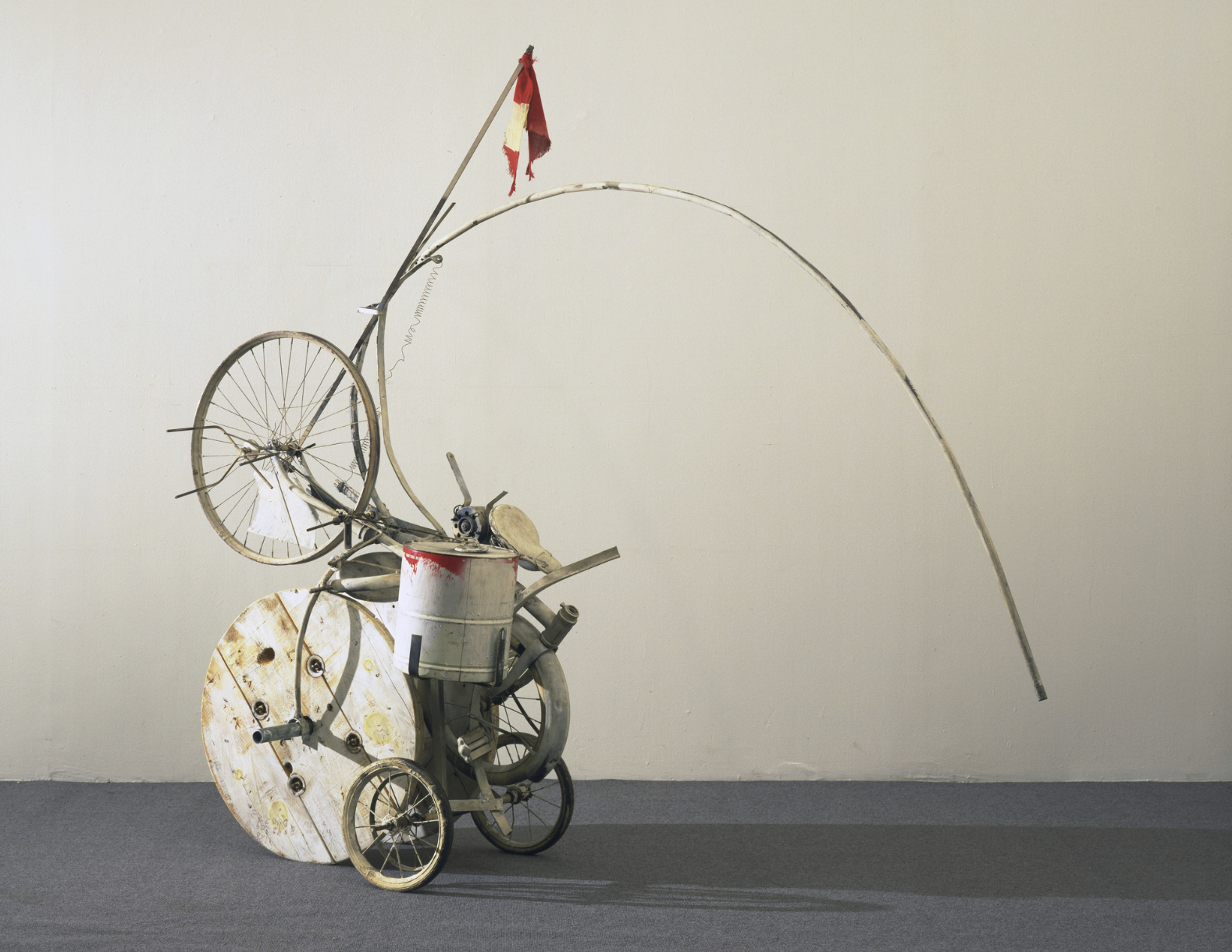
Contemporary artists often treat motion less as an engineering feat and more as a way of commanding attention, presence, and emotion. Some build works that react to invisible forces — air currents, temperature, the movement of viewers passing by. Others use motion as a form of meditation, slowing down time in an age that rarely stops. The movement can be gentle or monumental, mechanical or organic, but its purpose is no longer to astonish; it is to immerse.
Kinetic sculptures today often feel alive, not in a biological sense, but in their sensitivity. They respond, they breathe, they inhabit a space rather than simply occupy it. Their beauty lies not only in how they move, but in how we move around them.
In a world defined by constant motion, scrolling, switching, shifting, kinetic sculpture offers a rare kind of slowness. It pulls us into its pace. It invites us to watch, wait, anticipate. It offers a moment of physical, temporal presence, where the artwork becomes a companion rather than an object.

